Phone:
(701)814-6992
Physical address:
6296 Donnelly Plaza
Ratkeville, Bahamas.

Phone:
(701)814-6992
Physical address:
6296 Donnelly Plaza
Ratkeville, Bahamas.
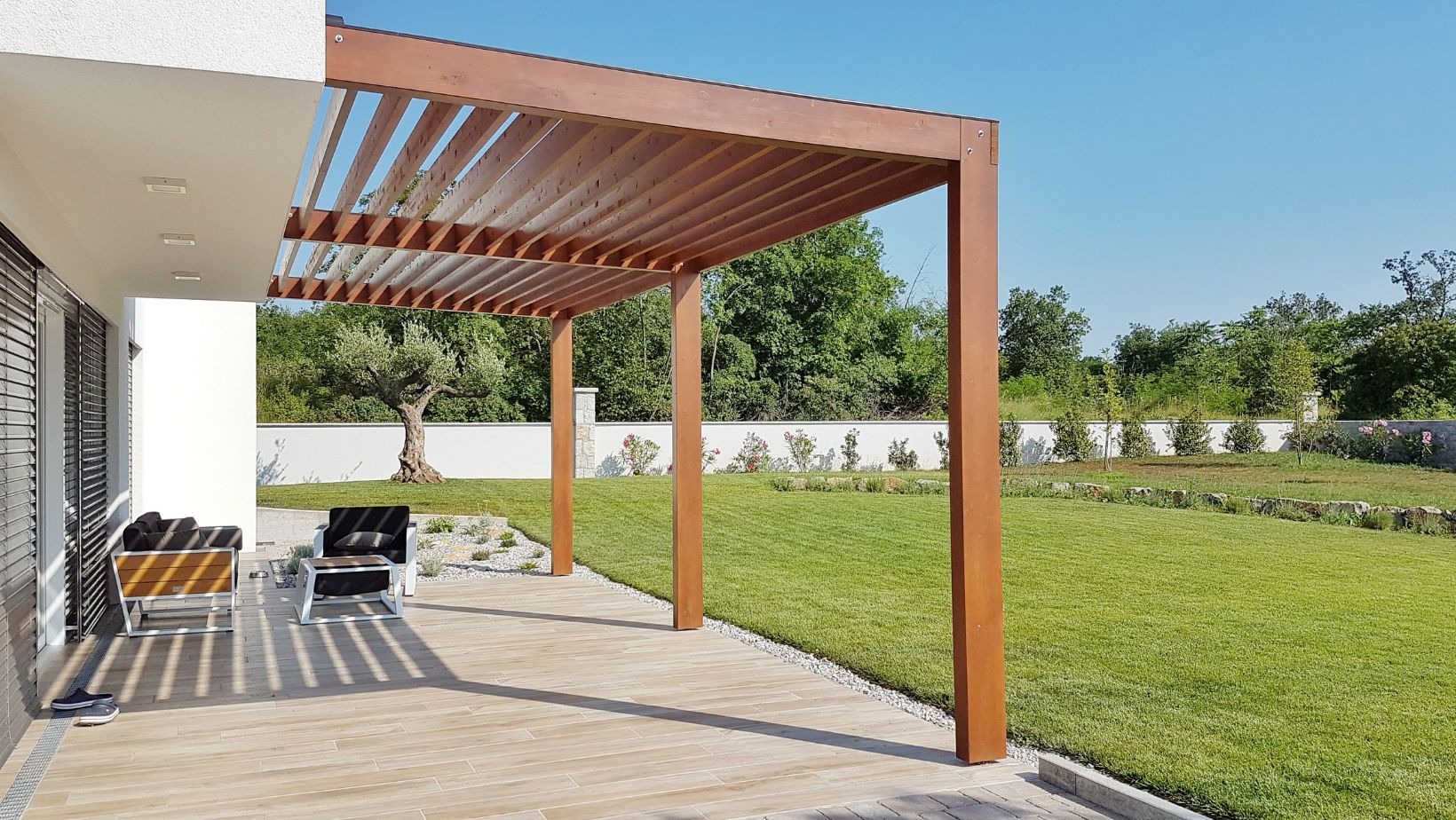
Choosing between an aluminum pergola and a wood pergola is about more than appearance.
The material you choose can affect the initial cost of your pergola, how much maintenance it requires, how it handles rain and sun, and how it looks years after installation.
Wood has long been a popular choice for traditional backyard pergolas because of its natural appearance. Aluminum offers a different approach: clean architectural lines, low maintenance, weather-resistant construction, and compatibility with modern features such as adjustable louvered roofs.
So, which one is better for your backyard?
In this guide, we’ll compare aluminum pergolas vs. wood pergolas based on cost, maintenance, lifespan, weather resistance, design, and everyday usability.
An aluminum pergola is an outdoor structure built primarily from aluminum rather than traditional lumber.
Modern aluminum pergolas can range from simple fixed-roof structures to advanced louvered pergolas with adjustable roof slats.
The louvers can be positioned to control sunlight and airflow. Depending on the pergola, they may be adjusted manually or operated using an electric motor.
Aluminum pergolas commonly use a powder-coated finish to provide their final appearance and additional surface protection.
This combination of adjustable shade, modern design, and relatively low maintenance has made aluminum a popular choice for contemporary outdoor living spaces.
A wood pergola is constructed using lumber such as cedar, redwood, pressure-treated wood, or other suitable species.
Traditional wood pergolas often feature vertical posts supporting beams and rafters overhead.
Wood’s biggest attraction is its appearance.
Natural grain, texture, and color can complement traditional homes, gardens, rustic landscapes, and other outdoor spaces where homeowners want a warmer aesthetic.
Wood can also be cut, stained, painted, and customized in many different ways.
However, because wood is a natural material exposed to outdoor conditions, it typically requires more ongoing care than aluminum.
| Feature | Aluminum Pergola | Wood Pergola |
| Maintenance | Generally lower | Generally higher |
| Painting/Staining | Typically not required regularly | Often required periodically |
| Rot Resistance | Does not rot like wood | Can be susceptible to rot |
| Insect Damage | Not vulnerable like wood | Can be susceptible |
| Modern Appearance | Excellent | Depends on design |
| Natural Appearance | Less traditional | Excellent |
| Adjustable Louvers | Commonly available | Less common |
| Motorization | Available | Less common |
| Initial Cost | Varies by system | Varies by wood and design |
| Long-Term Upkeep | Generally lower | Usually more involved |
Neither material is automatically right for every property. The better option depends on what you value most.
One of the first considerations for most homeowners is price.
Unfortunately, there isn’t a simple rule that says aluminum always costs more or wood always costs less.
The final pergola cost depends on size, design, material quality, installation, accessories, and whether you’re purchasing a standardized system or building a custom structure.
A basic wood pergola constructed from economical lumber may have a lower initial material cost than a premium aluminum louvered system.
However, premium woods, custom carpentry, large structural members, labor, staining, sealing, and ongoing maintenance can increase the cost of a wood pergola substantially.
Aluminum prices also vary.
A basic aluminum structure will be priced differently from a motorized louvered pergola with lighting, screens, sensors, and automation.
When comparing prices, look at the entire project rather than only the cost of the raw material.
Initial price is only one part of pergola ownership.
A wood pergola may require periodic cleaning, staining, sealing, painting, or repairs depending on the material and climate.
If you hire professionals for this work, those maintenance costs can accumulate over the years.
An aluminum pergola generally requires less routine surface maintenance.
That doesn’t mean aluminum is maintenance-free. Hardware, louvers, moving parts, and drainage channels should still be inspected and cleaned according to the manufacturer’s recommendations.
However, you aren’t maintaining the material in the same way you would maintain exposed wood.
For homeowners planning to keep their pergola for many years, long-term maintenance costs should be part of the purchasing decision.
If low maintenance is a priority, aluminum has a significant advantage.
Wood naturally responds to environmental conditions.
Depending on the species, finish, installation, and climate, exposure to moisture and sunlight can contribute to fading, cracking, checking, warping, or decay over time.
Protective coatings can help, but they need to be maintained.
Wood pergolas may periodically require:
An aluminum louvered pergola doesn’t need to be stained like natural wood.
Routine maintenance generally focuses more on keeping the structure clean and ensuring that hardware, roof mechanisms, and drainage areas remain in good condition.
Aluminum doesn’t rust in the same way iron or untreated steel does because it contains no iron.
However, that doesn’t mean aluminum is completely immune to environmental effects.
Aluminum can oxidize, and surface finishes can be damaged.
That’s one reason quality outdoor aluminum structures often use protective finishes such as powder coating.
Homeowners should still clean the structure periodically and follow the manufacturer’s maintenance recommendations, especially in coastal or other harsh environments.
The important distinction is that aluminum doesn’t face the same rot and insect concerns associated with wood.
There is no responsible way to give one exact lifespan for every pergola.
Longevity depends on material quality, engineering, installation, climate, exposure, maintenance, and how the structure is used.
A well-built aluminum pergola is designed for long-term outdoor use and avoids several deterioration issues associated with natural wood, including rot.
Wood pergolas can also last for many years when quality lumber is properly installed and maintained.
The difference is that wood’s longevity is often more dependent on ongoing maintenance.
If staining, sealing, repairs, or other necessary maintenance is ignored, deterioration may occur more quickly.
Rather than shopping based on a promised number of years, compare construction quality, finish, engineering, warranty coverage, and maintenance requirements.
Material alone doesn’t determine how well a pergola protects the area underneath it from rain.
Roof design matters enormously.
Many traditional wood pergolas have open rafters. They provide partial shade but allow rain to pass directly through.
A louvered aluminum pergola can use adjustable roof slats that close to provide greater overhead coverage.
When properly designed and installed, water can travel across the closed louvers into integrated drainage channels.
That gives an adjustable aluminum roof a major functional advantage over a traditional open-beam wood pergola.
If rain protection is important, understanding how louvered pergolas handle rain is more useful than simply comparing aluminum with wood.
Neither a wood pergola nor an aluminum pergola should automatically be treated as a fully enclosed room.
Pergolas generally have open sides.
Even with closed roof louvers, strong winds can carry rain into the covered area from the sides.
Homeowners looking for additional side protection may consider compatible retractable screens or other enclosure solutions.
Outdoor furniture and electronics should also be selected based on their expected exposure.
Wood and moisture require more consideration.
Certain woods naturally perform better outdoors than others, and pressure-treated lumber can provide additional resistance to decay and insects.
However, prolonged moisture exposure can still become a concern if the wood isn’t properly protected or if water becomes trapped.
This makes construction details especially important.
Water shouldn’t be allowed to collect around vulnerable areas, and protective finishes should be maintained when necessary.
Homeowners in wet climates should consider these ongoing requirements when comparing wood with weather-resistant aluminum pergolas.
Both materials can perform well in sunny environments when they’re designed and maintained appropriately.
However, sunlight can affect their appearance differently.
Wood can change color and weather as it’s exposed to UV radiation. Stain or paint can help maintain a particular appearance, but periodic refinishing may be required.
A powder-coated aluminum structure can retain a more consistent appearance with less routine refinishing, although any outdoor finish will experience environmental exposure over time.
Roof design also matters.
With an adjustable louvered pergola, you can change the roof angle as the sun moves throughout the day.
That gives you more control than a traditional pergola with fixed rafters.
For contemporary architecture, aluminum is often the natural choice.
Straight lines, slim profiles, powder-coated finishes, and adjustable roof systems work well with modern outdoor design.
An aluminum pergola can complement:
Wood creates a warmer and more traditional appearance.
It can be particularly attractive with craftsman-style homes, rustic landscapes, gardens, and properties where natural materials are a central part of the design.
This part of the decision is ultimately personal.
Yes. This is one of the biggest reasons homeowners consider aluminum louvered systems.
A motorized pergola uses an electric motor to adjust the roof louvers.
Instead of turning a crank, you can operate a compatible system using controls such as a remote or switch. More advanced systems may support additional automation features depending on their configuration.
Motorization is especially convenient when you expect to adjust the roof several times throughout the day.
If you’re considering automation, review how much a motorized pergola costs before deciding whether the added convenience fits your budget.
You don’t need motorization to benefit from an aluminum louvered roof.
A manual louvered pergola uses a hand-operated mechanism to adjust the louvers.
This gives you control over sunlight and shade without requiring electricity to operate the roof.
Manual operation can be an excellent choice for homeowners who want adjustable louvers but don’t expect to reposition them constantly.
Before paying extra for automation, compare manual vs. motorized louvered pergolas based on how you’ll actually use your outdoor space.
Wood has traditionally been one of the easiest materials to customize on site.
Carpenters can cut, modify, paint, and stain it to suit a specific property.
That makes wood attractive for highly customized architectural projects.
Aluminum systems generally work differently.
They’re manufactured around specific structural components and configurations. Depending on the supplier, homeowners may have access to multiple standard sizes, finishes, accessories, and custom configurations.
The advantage of standardized aluminum systems is consistency.
If your backyard can accommodate a common size, a ready-to-ship pergola may provide a more straightforward path than designing and building a structure entirely from scratch.
Pergola size should be determined primarily by your outdoor space and intended use rather than material alone.
A compact seating area has very different requirements from an outdoor kitchen and dining space.
Before comparing aluminum and wood quotes, determine how much coverage you actually need.
Measure the patio and map out your furniture.
Our pergola size guide explains how common sizes can work for dining areas, lounge spaces, outdoor kitchens, and larger entertainment areas.
Having a target size makes cost comparisons much more meaningful.
Outdoor kitchens are a good example of where functionality matters as much as appearance.
An outdoor kitchen may contain a grill, refrigerator, countertops, seating, lighting, and electrical equipment.
A louvered aluminum roof allows homeowners to adjust sunlight and ventilation above the area while creating greater overhead coverage when the louvers are closed.
However, any pergola installed around grills, heaters, fireplaces, or other heat-producing equipment must follow appropriate manufacturer requirements, clearances, local codes, and professional installation guidance.
Never assume that simply having an aluminum structure makes every location appropriate for cooking equipment.
Value depends on what you’re looking for.
Wood can be an excellent choice if natural appearance and traditional construction are your priorities and you’re comfortable with ongoing maintenance.
Aluminum can be the better value if you prioritize lower routine maintenance, modern styling, resistance to rot and insect damage, and the option of an adjustable louvered roof.
Think beyond the first year.
Ask yourself how much maintenance you’re willing to perform five or ten years from now.
A pergola is a long-term part of your backyard, so the ownership experience matters just as much as the installation-day appearance.
Choose a wood pergola if you prioritize natural materials, traditional styling, and extensive on-site customization—and you’re comfortable maintaining the wood over time.
Choose an aluminum pergola if you want modern styling, lower routine maintenance, resistance to rot and insect damage, and access to features such as adjustable louvers and motorization.
For homeowners specifically looking to control sunlight, shade, airflow, and overhead coverage, an aluminum louvered system offers functionality that a traditional open-roof wood pergola generally doesn’t provide.
Ultimately, the right choice depends on your budget, home design, climate, maintenance expectations, and how you plan to use your backyard.
A pergola shouldn’t be selected based on material alone.
Consider what you want your outdoor space to do.
If your primary goal is a decorative structure covered in climbing plants, wood may provide exactly the natural aesthetic you’re looking for.
If you want an outdoor living area where you can actively control sunlight and shade, an aluminum louvered pergola may be the better fit.
Pergola Cave offers manual and motorized aluminum louvered pergolas in multiple sizes for homeowners looking to create more functional outdoor living spaces.
Before choosing your pergola, compare the initial cost, long-term maintenance, roof functionality, weather resistance, available sizes, and features you’ll actually use.
The best pergola isn’t simply the one that looks good on installation day. It’s the one that continues to work for your backyard and lifestyle for years to come.